Recent advances in AI have seen remarkable progress, with unprecedented improvements on many complex tasks. This has in turn resulted in a massive increase in speculations on what such novel systems might be capable of, up to the point where even an AI engineer believed their own technology had become sentient or conscious. This raises more basic questions such as what it actually means to be sentient or conscious and how non-humans can be properly tested for fundamental aspects of human thinking. These kinds of questions have been studied extensively for decades in the field of animal cognition, which investigates the mental processes and abilities of non-human animals. By exploring the depths of animal cognition research and applying its principles to AI systems, this course aimed to inspire us to think beyond conventional testing methods, fostering the development of AI systems with appropriate cognitive abilities
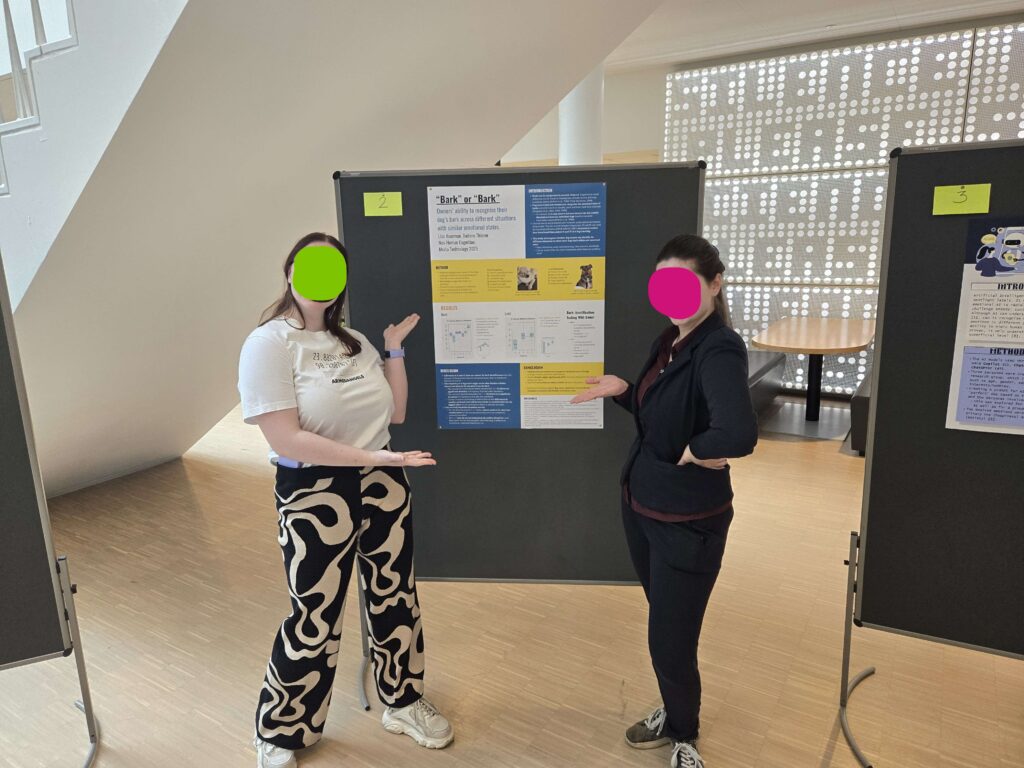
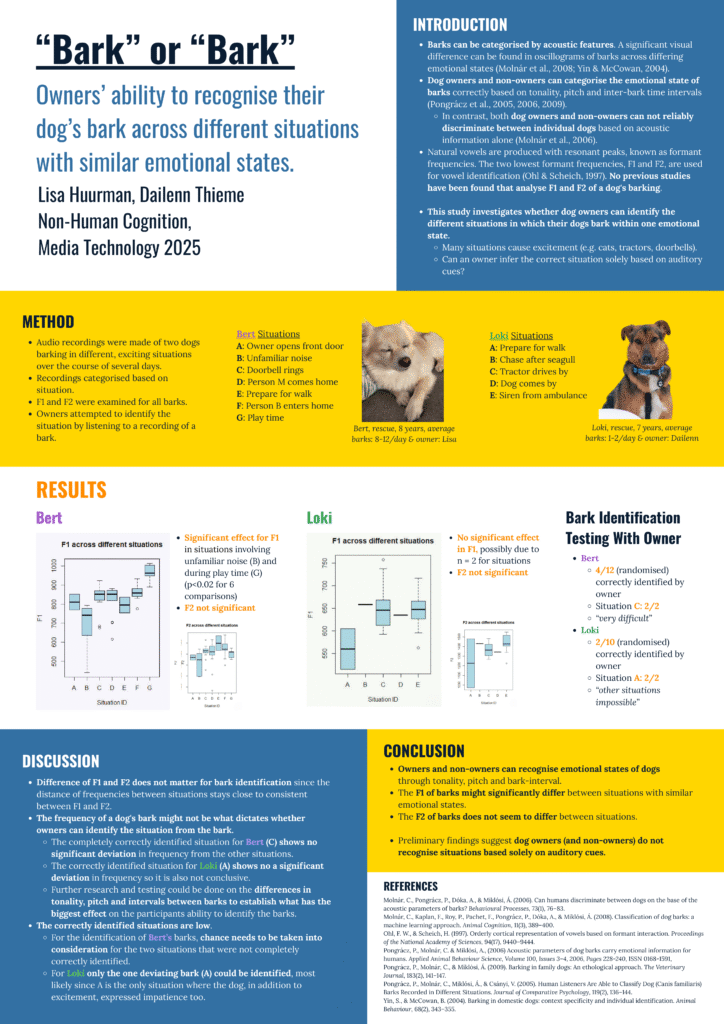
We read and discussed literature on animal and computational cognition and gained hands-on practice with a small research project, involving the writing of a proposal and the design and presentation of a scientific poster, which was displayed at a poster festival in the last weeks of the course.